


API 674 Plunger Pump India: Choosing a Diesel Engine Driven High Pressure Pump
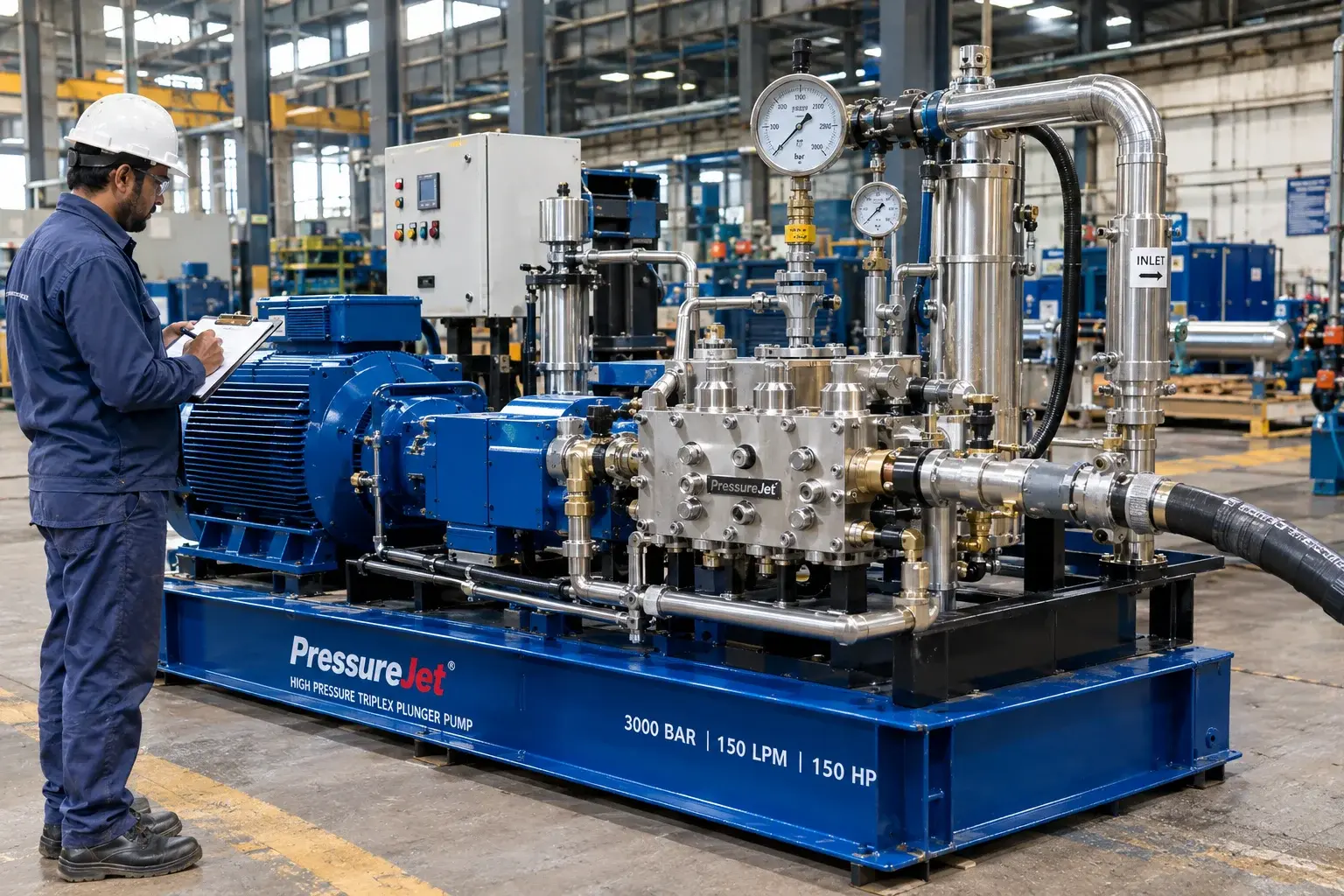
PressureJet 3000 bar high-pressure triplex plunger pump designed for demanding industrial water jetting applications.
Buyers researching industrial plunger pumps in India run into two recurring questions fairly quickly. The first is technical: does the pump need to meet API 674, the American Petroleum Institute's standard for reciprocating positive displacement pumps? The second is practical: should the pump be electric or diesel driven, especially for sites where grid power cannot be relied on? This guide answers both, then walks through how to compare Indian manufacturers and whether importing a pump still makes sense in 2026.
What Is an API 674 Plunger Pump, and Why Does It Matter in India?
API 674 covers the minimum mechanical design, construction, and testing requirements for reciprocating plunger pumps used in demanding process environments, including the petroleum, petrochemical, and gas sectors. The standard sets expectations around plunger velocity, sealing systems, material selection, and maintenance access so that pumps built to it hold up under continuous high pressure duty rather than failing prematurely.
Where API 674-Aligned Design Shows Up in Indian Industry
Even outside oil and gas, the engineering principles behind API 674 — robust plunger design, low pulsation, and wear-resistant seals — show up across Indian heavy industry. A hot steel descaling system built around a 150 HP descaling pump relies on the same core design philosophy: continuous high pressure output without premature seal failure. Buyers asking about an API 674 plunger pump in India are often really asking whether a manufacturer builds to that level of mechanical robustness, whether or not the specific project requires full API certification.
Diesel Engine Driven High Pressure Pump Built for Sites Without Reliable Power
Why Diesel Drive Matters for Remote and Mission-Critical Sites
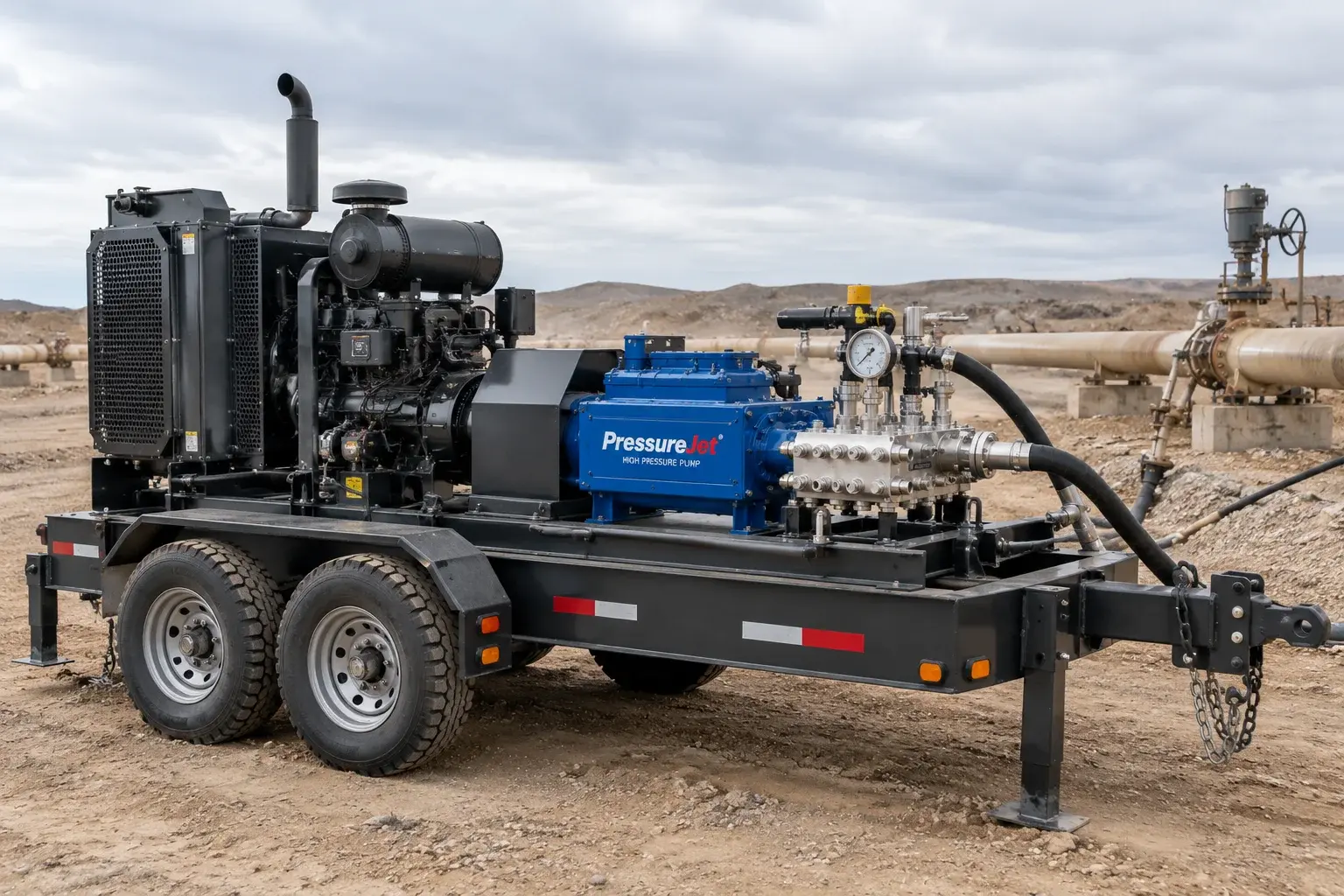
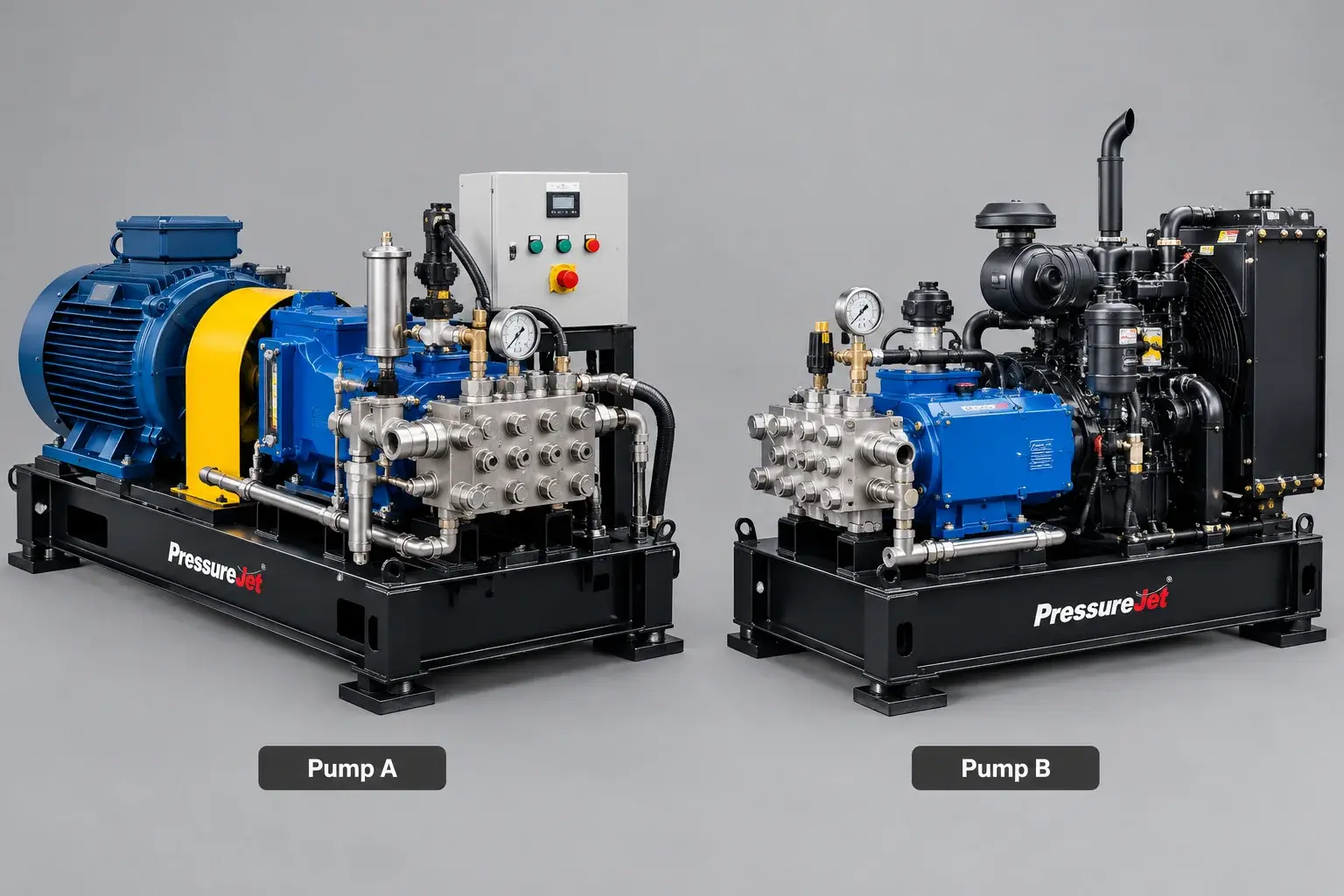
In locations where grid power is unstable or simply unavailable, electric motor driven pumps become a liability rather than a convenience. A diesel engine driven high pressure pump operates independently of the grid, which is why diesel drive remains the preferred choice in developing regions and remote industrial zones where a stable power supply cannot be guaranteed (FFW Fire Safety, April 2026).
UHP Fire Fighting Pump Applications with Diesel Drive
This matters most in fire protection. A UHP fire fighting pump often needs to run during the exact conditions that take down grid power, such as a major industrial fire. Site planners comparing fire pump manufacturers should check whether diesel engine driven options are available alongside electric variants, particularly for refineries, offshore platforms, and other sites where the high pressure fire fighting pumps for sale need to work regardless of utility power status.
Diesel vs Electric Drive for Descaling, Jetting, and Blasting Pumps
Outside fire protection, the choice is more about site logistics than survival. A hydro jetting machine or hydro blasting machine used at a fixed industrial site with stable power typically runs more economically on an electric motor. The same equipment deployed to a remote pipeline, mine site, or construction project often needs a diesel engine driven high pressure pump simply because there is no grid connection to use.
Compare PressureJet and Ambica Machine Tools
Both are established Indian manufacturers of triplex plunger pump technology, though they have built somewhat different product focuses over time.
| Factor | PressureJet | Ambica Machine Tools |
|---|---|---|
| Headquarters | India, with installations in 50+ countries | Ahmedabad, Gujarat |
| Core focus | Application-engineered systems: descaling, hydro jetting, hydro blasting, sewer jetting, hydrostatic testing, UHP fire fighting | Broad general industrial pump range: triplex plunger pumps, hydro test pumps, barrel pumps, AODD pumps, industrial valves |
| Pressure range | High to ultra-high pressure systems built for heavy industrial duty cycles | Pumps commonly rated up to around 500 bar for hydro testing, car wash, and general jetting use |
| Certification | ISO-certified manufacturing | ISO 9001:2008 certified manufacturing |
| Best suited for | Buyers needing a pump engineered around one demanding application, such as steel mill descaling or UHP fire suppression | Buyers needing a wider catalogue of general-purpose industrial pumps, valves, and testing equipment from a single supplier |
Neither company is a better fit across every project. A buyer with one demanding, continuous-duty application is generally better served by a manufacturer that engineers specifically around that use case, while a buyer sourcing several different pump types for a facility may prefer a supplier with a broader standard catalogue. The right call depends on the application, not the brand name.
Is It Worth Importing a High Pressure Pump or Buying Indian?
This question comes up constantly, and the honest answer is that it depends on the application and timeline. India's Basic Customs Duty on most industrial machinery currently runs in the 5 to 15 percent range following recent tariff rationalisation, and imported capital goods also attract Integrated GST and a Social Welfare Surcharge on top of that, which adds meaningfully to landed cost. At the same time, India's domestic capital goods sector has been expanding quickly, with the Index of Industrial Production for capital goods rising 8.1 percent in late 2025, reflecting a broader industrial build-out that includes pump manufacturing (Invest India, 2026).
Beyond duty and tax, three practical factors usually decide the question. Lead time favours Indian manufacturers, since an imported pump can take months to arrive after customs clearance, while a domestic order is often installed in weeks. Spares and service favour domestic suppliers too, since a locally manufactured descaling pump system or hydrostatic test pump can usually be serviced on-site rather than waiting on an overseas parts shipment. Customisation is the other factor: Indian manufacturers building to order can adjust flow, pressure, and skid configuration for a specific application far more easily than a standard imported catalogue unit.
Where Indian-Made High Pressure Pumps Fit Across Applications
Beyond descaling and fire fighting, Indian manufacturers also build dedicated systems for pressure testing and cleaning. A hydrostatic test pump verifies pipeline and vessel integrity before commissioning, and buyers comparing hydrostatic pressure testing equipment should confirm the supplier offers accurate, repeatable pressure control rather than a basic hydrostatic pump for sale with no calibration documentation. For cleaning applications, a hydro jetting machine handles tube and pipe cleaning, while a hydro blasting machine is built for tougher coating and scale removal, and either a hydro jetter for sale or a jetter machine for sale should be sized to the actual job rather than bought on pressure rating alone. Municipal and industrial drainage, meanwhile, relies on a sewer jetting pump from an established sewer cleaning machine manufacturer in India to clear blockages without excavation.
Frequently Asked Questions
1. Compare PressureJet and Ambica Machine Tools
Both are established Indian manufacturers of triplex plunger pump technology, though they have built somewhat different product focuses over time. PressureJet focuses on application-engineered systems such as descaling, hydro jetting, hydro blasting, sewer jetting, hydrostatic testing, and UHP fire fighting, while Ambica Machine Tools offers a broader general industrial pump range including triplex plunger pumps, hydro test pumps, barrel pumps, AODD pumps, and industrial valves. PressureJet serves high to ultra-high pressure applications and is suited to demanding continuous-duty applications, while Ambica Machine Tools is suited to buyers looking for a wider catalogue of general-purpose industrial pumps, valves, and testing equipment. Neither company is a better fit across every project; the right choice depends on the specific application, pressure, flow, duty cycle, customization, and service requirements.
2. Is It Worth Importing a High Pressure Pump or Buying Indian?
Whether to import a high pressure pump or buy from an Indian manufacturer depends on the application, timeline, landed cost, service requirements, and customization needs. India's Basic Customs Duty on most industrial machinery currently runs in the 5 to 15 percent range, while imported capital goods can also attract Integrated GST and a Social Welfare Surcharge, increasing landed cost. Domestic sourcing can offer advantages in lead time, spare parts availability, after-sales service, and customization. Indian manufacturers can often configure pressure, flow, drive arrangement, and skid design for specific applications such as descaling or hydrostatic testing. For demanding industrial applications, the total cost of ownership and service support should be evaluated alongside the initial purchase price.
3. Is PressureJet or Ambica Machine Tools the better choice?
Neither is universally better. PressureJet focuses on application-engineered systems for heavy-duty descaling, hydro blasting, and UHP fire fighting, while Ambica Machine Tools offers a broader general industrial pump catalogue. The right choice depends on whether you need one specialised system or a range of standard pumps.
4. Is it cheaper to import a high pressure pump than to buy from an Indian manufacturer?
Not usually, once customs duty, IGST, freight, and lead time are factored in. Domestic manufacturers also tend to offer faster spares and service response, which matters more over a pump's operating life than the initial purchase price.
5. What should a buyer check before choosing a plunger pump manufacturer in India?
Confirm the manufacturer has direct experience with the specific application, ask about typical lead times for spares, and check whether the pump can be customised for the exact pressure, flow, and drive requirements of the site rather than sold as an off-the-shelf unit.
Need help matching pressure, flow, duty cycle, and drive type to your site? Share your application requirements through the PressureJet enquiry page.
Back to Blog
Parameters

Customers

Manufacturing

Expertise