


Descaling Pump and Hydrostatic Test Pump Manufacturers: What to Check Before You Source
Steel plants and pipeline contractors often end up sourcing two very different pump systems from two different vendors: a descaling pump for mill-line scale removal, and a hydro test pump for pressure-testing pipes and vessels before commissioning. In reality, a capable manufacturer usually builds both, because both rely on the same core engineering discipline: reciprocating plunger technology rated for high, repeatable pressure. Knowing what separates a genuine descaling pump manufacturer or hydrostatic test pump supplier from a reseller can save weeks of downtime later.
What a Descaling Pump Manufacturer Actually Builds
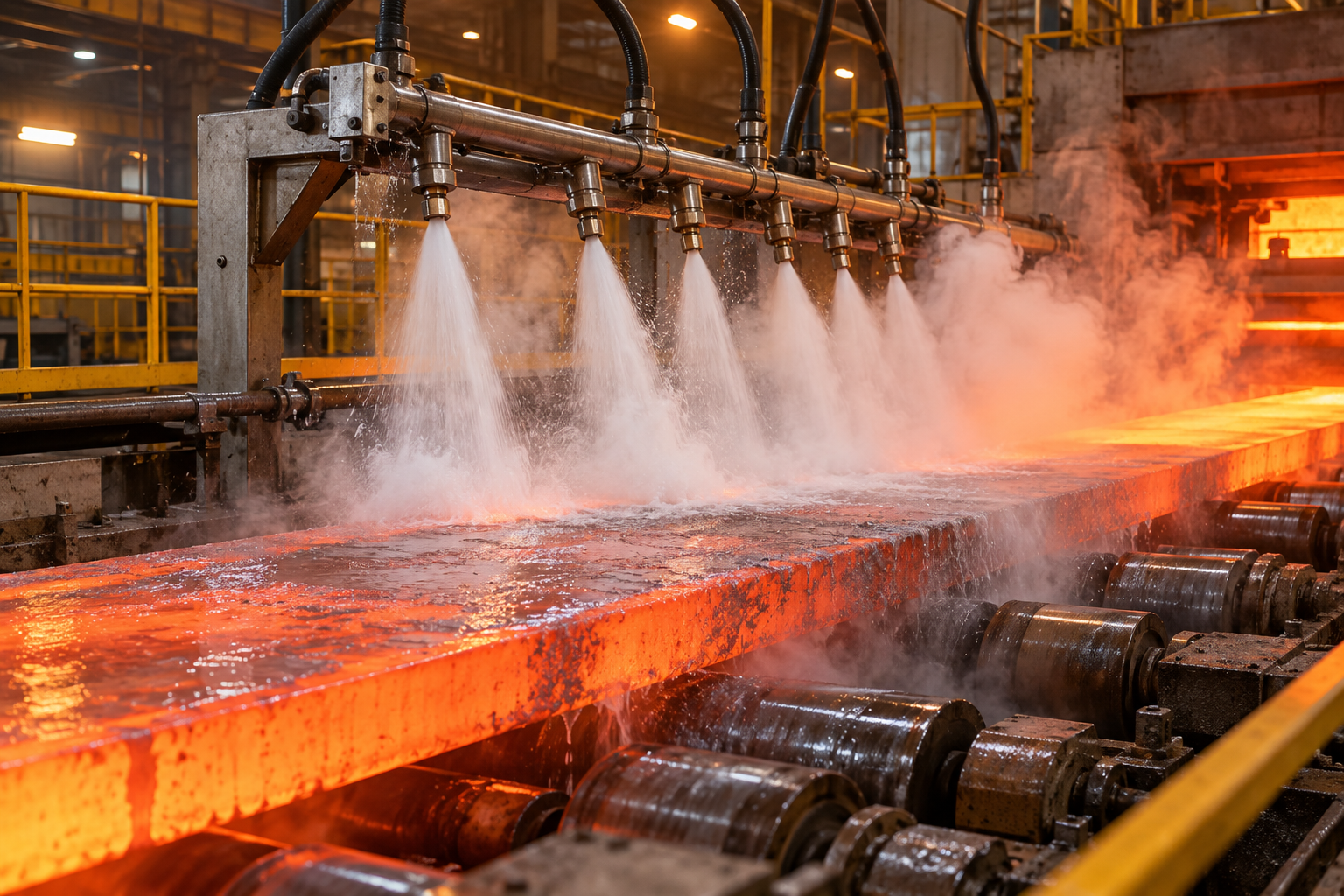
Descaling pumps remove mill scale from steel before rolling, using concentrated water jets rather than mechanical abrasion. This isn't a light-duty job. A descaling system typically runs continuously across a shift, at pressures that would overwhelm a standard cleaning pump within hours.
Why Continuous-Duty Rating Matters Here
A descaling pump manufacturer that also builds under API 674, the American Petroleum Institute's specification for reciprocating plunger pumps, is generally a stronger long-term bet. The standard covers mechanically robust designs meant for continuous operation at high delivery pressures, and its typical applications explicitly include steel and heavy industry descaling pumps and high-pressure cleaning, according to KAMAT's High-Pressure Technology Glossary, Feb 5, 2026. A pump built to that standard is engineered for sustained pressure, not just a short burst rating on a spec sheet.
If you're comparing a High Pressure Pump Manufacturer against a smaller reseller, ask directly whether descaling units are designed for continuous shift-length operation or only rated for intermittent duty. This single question filters out most of the weaker suppliers.
What a Hydro Test Pump Manufacturer and Hydrostatic Test Pump Supplier Need to Deliver
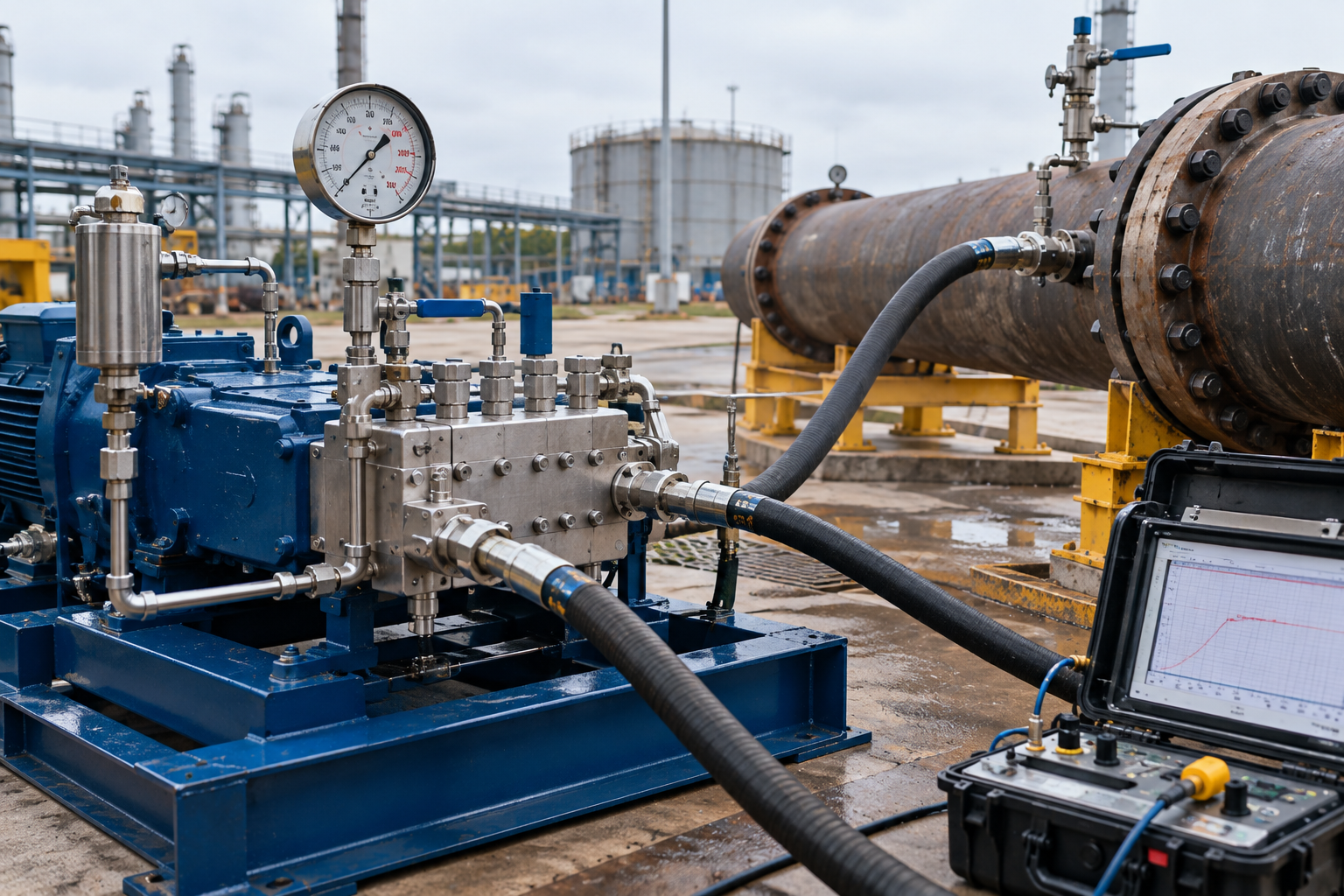
Hydrostatic testing is how pipelines, pressure vessels, and tanks are verified as structurally sound before they go into service. Per ASME B31.3, the standard test pressure for process piping is 1.5 times the design pressure, adjusted for temperature, and the test itself is only as reliable as the pump generating and holding that pressure, per ProjectMaterials, Jul 12, 2026.
That means a hydro test pump manufacturer isn't just selling a pressure source. The pump needs to:
- Reach and hold a precise, stable test pressure without fluctuation
- Support the extended hold times these codes require, sometimes several hours
- Interface cleanly with calibrated pressure recorders and gauges
- Deliver consistent, repeatable results across multiple test cycles
Poor pressure stability during a hold period can force a retest, which on a pipeline commissioning schedule is rarely a small cost. ASME's own pressure piping code, B31, exists specifically to standardize these test procedures because inconsistent pump performance has historically been a common failure point, per Petersen Products, Aug 26, 2025.
Choosing a Hydrostatic Test Pump Supplier
Beyond the pump itself, a hydrostatic test pump supplier should be able to configure a system for your specific test scope. For non-standard vessel geometries or unusual pressure and volume combinations, a triplex plunger pump manufacturer in India offering configurable systems is often a better fit than a fixed-spec off-the-shelf unit, particularly when a project calls for a High Pressure Pump Manufacturer in India that can adapt the build rather than force the project around a standard model.
Why Manufacturer Overlap Between These Two Categories Is a Good Sign
It might seem unrelated that a company builds both descaling pumps and hydrostatic test pumps, but the overlap is a useful signal. Both product lines require:
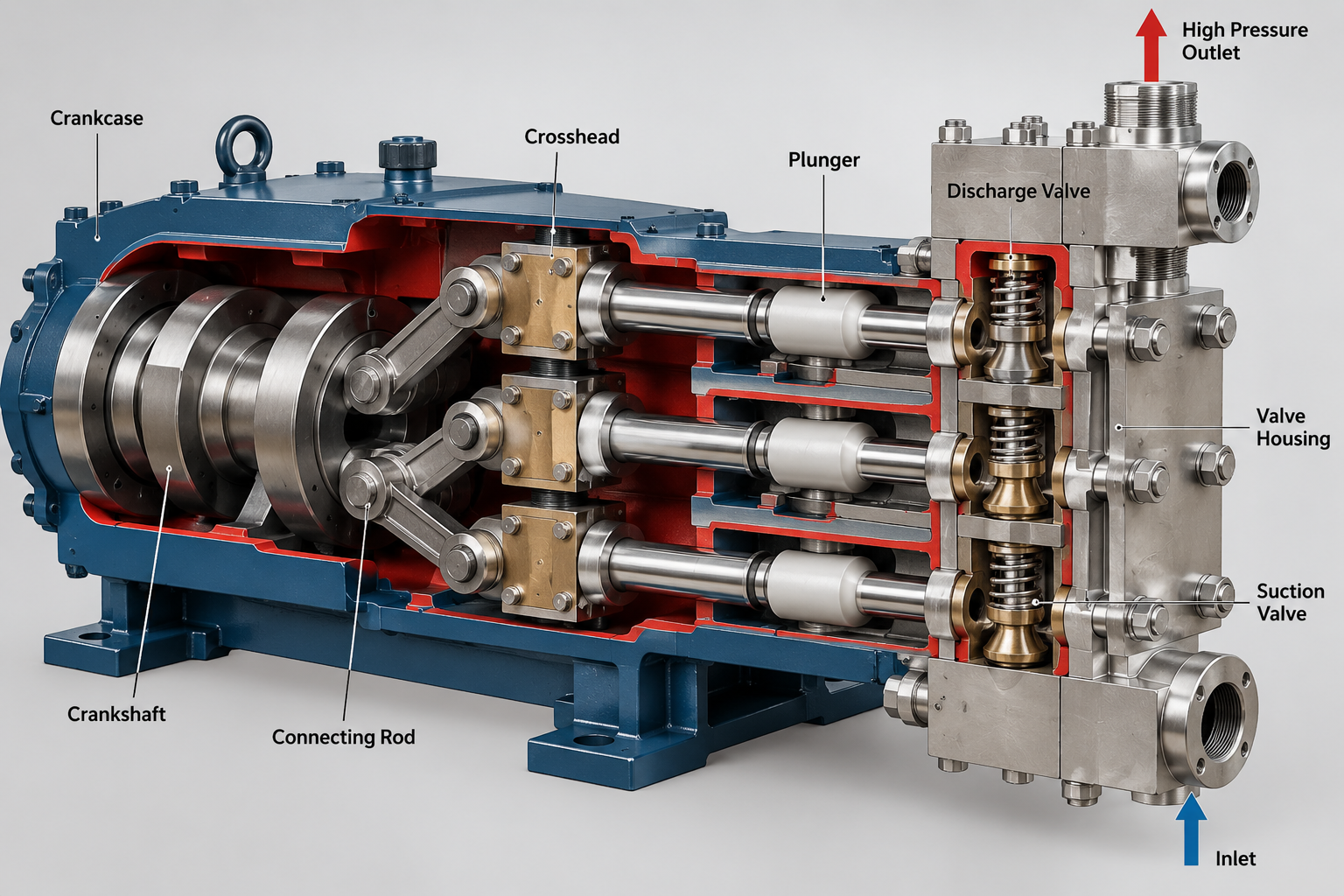
- Triplex or higher plunger configurations for low pulsation and smooth flow
- Precision-machined plungers, valves, and cylinder blocks rated for repeated high-pressure cycles
- In-house testing infrastructure capable of validating sustained pressure, not just peak pressure
A manufacturer that has genuinely engineered both categories, rather than assembling one from bought-in components, tends to carry that same rigor into supporting equipment. That includes reliable access to High Pressure Pump Spare Parts in India, since both descaling and hydro test operations depend on fast seal, valve, and plunger replacement to avoid extended downtime, and complementary equipment such as a Sewer Jetting Machine Manufacturer line, which draws on the same underlying plunger pump platform for a different application.
A Quick Checklist Before You Order
Before finalizing a descaling pump manufacturer or hydrostatic test pump supplier, confirm:
- Duty rating: continuous shift duty for descaling, stable extended-hold pressure for hydro testing
- Standards compliance: API 674 for plunger pump design, ASME B31.1 or B31.3 for hydrostatic test procedures
- In-house manufacturing: plunger, valve, and cylinder block production, not just assembly
- Spare parts turnaround: stocked inventory versus made-to-order lead times
- Configurability: ability to build a custom system for non-standard test volumes or pressures
FAQs
1. What is the difference between a descaling pump and a hydro test pump?
Intent: Informational A descaling pump removes mill scale from steel using continuous high-pressure water jets, while a hydro test pump pressurizes pipelines, vessels, or tanks to verify structural integrity before commissioning. Both use plunger pump technology but are configured for different pressure and duration profiles.
2. What standard governs hydrostatic test pump pressure requirements?
Intent: Informational ASME B31.3 sets the standard test pressure for process piping at 1.5 times the design pressure, adjusted for temperature, while ASME B31.1 applies the same factor for power piping. Pipeline-specific projects may also reference API 5L or API RP 1110 depending on scope.
3. Why does API 674 matter when choosing a descaling pump manufacturer?
Intent: Commercial API 674 is the API standard for reciprocating plunger pumps, and manufacturers building to this specification typically design for continuous high-pressure operation rather than intermittent duty, which matters directly for steel mill descaling applications.
4. How long does a hydrostatic pressure test typically need to hold?
Intent: Informational Hold times vary by code and project scope. Some pipeline specifications call for a minimum of 24 hours after stabilization, while shorter process piping tests may hold for a matter of minutes, so the required duration should be confirmed against the applicable project specification.
Frequently Asked Questions
1. What is the difference between a descaling pump and a hydro test pump?
Intent: Informational A descaling pump removes mill scale from steel using continuous high-pressure water jets, while a hydro test pump pressurizes pipelines, vessels, or tanks to verify structural integrity before commissioning. Both use plunger pump technology but are configured for different pressure and duration profiles.
2. What standard governs hydrostatic test pump pressure requirements?
Intent: Informational ASME B31.3 sets the standard test pressure for process piping at 1.5 times the design pressure, adjusted for temperature, while ASME B31.1 applies the same factor for power piping. Pipeline-specific projects may also reference API 5L or API RP 1110 depending on scope.
3. Why does API 674 matter when choosing a descaling pump manufacturer?
Intent: Commercial API 674 is the API standard for reciprocating plunger pumps, and manufacturers building to this specification typically design for continuous high-pressure operation rather than intermittent duty, which matters directly for steel mill descaling applications.
4. How long does a hydrostatic pressure test typically need to hold?
Intent: Informational Hold times vary by code and project scope. Some pipeline specifications call for a minimum of 24 hours after stabilization, while shorter process piping tests may hold for a matter of minutes, so the required duration should be confirmed against the applicable project specification.

Parameters

Customers

Manufacturing

Expertise